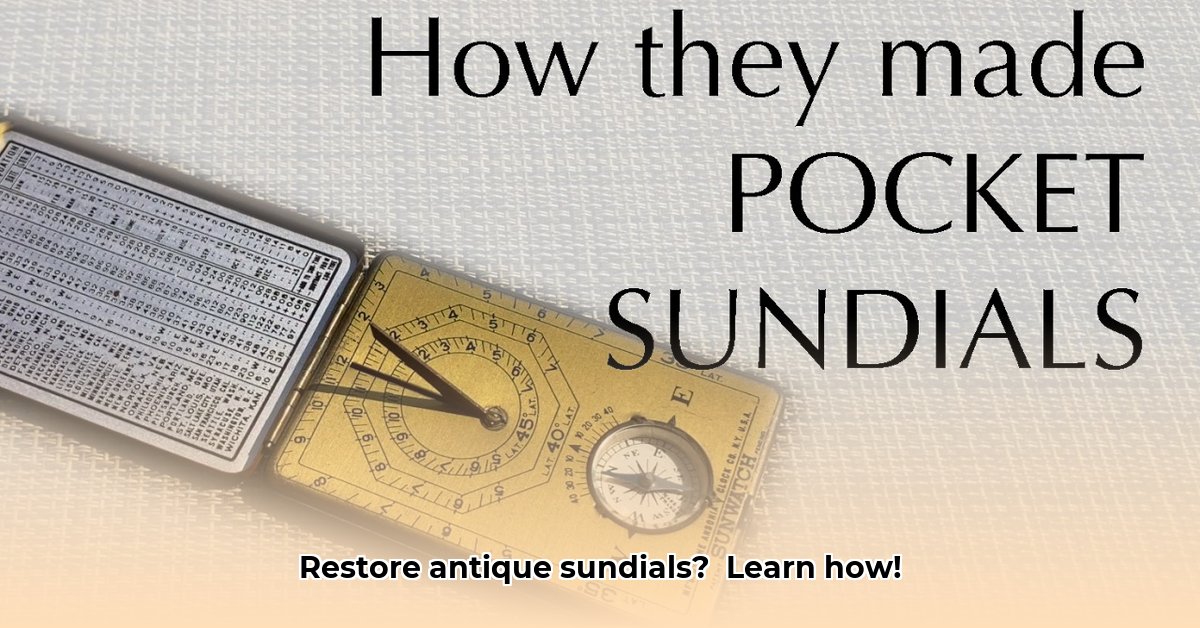
Assessing Your Antique Sundial: A Crucial First Step
Before initiating any restoration, a thorough assessment is paramount. Document the sundial's condition meticulously. Take high-resolution photographs, focusing on details like cracks in the gnomon (the shadow-casting pointer), weathering on the dial (the clock face), and the stability of the base. This detailed record will guide your restoration process. Remember, a picture is worth a thousand words – and in this case, it's invaluable for tracking progress and potential issues. What are the most significant signs of damage you've observed in similar projects? For more information on sundials, visit this helpful resource: Sun Clock Guide.
Disassembly: A Precise and Methodical Approach
Disassembling your sun clock requires precision. Use appropriate tools—small screwdrivers, tweezers—and proceed methodically. Photograph each step, clearly labeling each component. This detailed documentation will be crucial during reassembly. Gentle pressure is key; forceful dismantling can cause irreparable damage. The process is akin to carefully dissecting a complex mechanism. What percentage of restoration failures are attributed to improper disassembly?
Cleaning: Gentle Restoration for Various Materials
Cleaning is vital, but different materials require specific methods. A soft brush and mild soapy water might suffice for stone surfaces but avoid harsh chemicals which can cause irreversible damage. For metals, appropriate metal cleaners are recommended; always test these on a hidden area beforehand. Wood needs a gentle approach, employing a soft cloth and wood-specific cleaner. The goal is meticulous cleaning without inflicting further damage. How frequently do you encounter irreversible damage due to inappropriate cleaning solutions?
| Material | Recommended Cleaning Solution | Important Precautions |
|---|---|---|
| Stone | Mild soapy water and a soft-bristled brush | Avoid abrasive materials that could scratch the surface |
| Metal | Specialist metal cleaner (test in an inconspicuous area first!) | Always test a small, inconspicuous area first |
| Wood | Soft cloth, specialized wood cleaner (follow instructions carefully) | Gentle care is essential to prevent damage |
| Painted Surfaces | Very soft brush or lint-free cloth, possibly isopropyl alcohol (test first) | Avoid harsh scrubbing or chemicals; test in an inconspicuous area |
Repair and Replacement: Addressing Damage and Seeking Expertise
Some repairs are straightforward—tightening screws, regluing small cracks. However, more substantial repairs, like replacing a broken gnomon, might require custom fabrication and professional expertise. Don't hesitate to consult a professional antique clock restorer for complex situations. Their knowledge ensures the best possible outcome, preserving both the historical and monetary value of your antique. What percentage of restorations require expert intervention for complex repairs?
Reassembly: The Rewarding Process of Reconstruction
Reassembly is the reverse of disassembly, but equally crucial. Carefully reference your photographs and notes; they act as your roadmap. Proceed slowly, double-checking the alignment of each part. Accuracy is vital; even a minor misalignment can affect functionality. Patience and precision are paramount. What is the typical time commitment for the reassembly process in a restoration of this complexity?
Protective Finishes: Preserving Your Restored Treasure
Protect your restored sun clock with a suitable sealant, carefully considering compatibility with the materials used. Numerous options exist, from specialized waxes to clear coats. Thorough research is key; the goal is long-term preservation. This final step safeguards your hard work and ensures the sun clock's longevity. What is the average lifespan extension achieved through the application of appropriate protective finishes?
Sourcing Authentic Replacement Parts: A Multi-Pronged Approach
Finding authentic replacement parts requires a thorough approach. Antique clock dealers and auction houses are essential resources, but estate sales, flea markets, and online communities offer additional avenues. Consider salvaged parts from discarded clocks for sustainability, following ethical sourcing guidelines. This search is akin to a treasure hunt, demanding patience and diligence. How significant is the challenge of locating authentic replacement parts?
| Material | Cleaning Solution | Precautions |
|---|---|---|
| Brass | Mild soapy water, then polishing cloth | Avoid abrasive cleaners. |
| Bronze | Similar to brass | Avoid harsh chemicals. |
| Iron/Steel | De-rusted with specialized solutions | Always wear protective gear. |
| Wood | Specialized wood cleaners | Test cleaner in an inconspicuous area first. |
Beyond the Basics: When Expert Help Is Essential
For severely damaged dials or intricate mechanism repairs, professional assistance is advisable. Experienced restorers possess specialized skills and techniques to ensure a successful and historically accurate restoration. Their expertise safeguards both the historical and monetary value of your antique. When should you prioritize seeking expert assistance during the restoration process?
Remember, restoring an antique sun clock is a rewarding journey combining meticulous care, skilled craftsmanship, and a deep appreciation for history. The result is not just a functioning timepiece but a preserved piece of artistry and history.